
Forget Password

View News
Empowering the User: The Legal Framework of Electricity Consumption in India
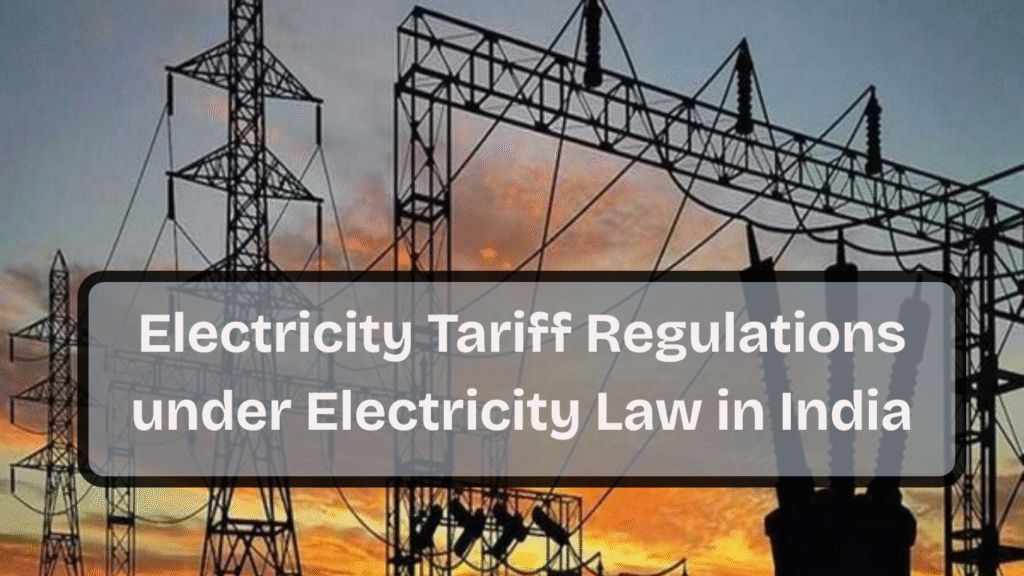
Empowering the User: The Legal Framework of Electricity Consumption in India
~Sura Anjana Srimayi
INTRODUCTION
In the modern economic landscape of India, electricity is not merely a utility; it is the lifeblood of both household comfort and industrial productivity. As of 2026, the governance of electricity consumption has evolved into a sophisticated regulatory architecture that balances the monopolistic nature of distribution companies (DISCOMs) with the burgeoning rights of the end-user. Whether one is a residential occupant in a metropolitan apartment or a large-scale commercial entity, the legal framework, anchored by the Electricity Act, 2003 and the Electricity (Rights of Consumers) Rules, 2020, ensures a structured, transparent, and rights-based approach to power consumption.
I. The Statutory Bedrock: The Electricity Act, 2003
The Electricity Act, 2003 remains the primary legislation governing the entire power sector, from generation to final consumption. Its enactment marked a transition from a state-monopoly model to a competitive, market-oriented structure.
- Rationalization of Tariffs: The Act empowers State Electricity Regulatory Commissions (SERCs) to determine tariffs in a transparent manner. This ensures that electricity pricing is not arbitrary but based on clearly defined costs and socio-economic considerations.
- Consumer Grievance Redressal: Under Section 42 of the Act, every distribution licensee is mandated to establish a Consumer Grievance Redressal Forum (CGRF). This provides a formal, accessible legal pathway for consumers to contest billing disputes, service deficiencies, and unfair trade practices.
- Competition and Open Access: The Act introduced the concept of "Open Access," allowing large commercial consumers to procure power from alternate suppliers, thereby introducing a degree of competition that was historically absent in a vertically integrated distribution sector.
II. The 2020 Paradigm Shift: Electricity (Rights of Consumers) Rules
If the 2003 Act provided the framework, the Electricity (Rights of Consumers) Rules, 2020, provided the "bill of rights." These rules shifted the power dynamic, placing the consumer at the center of the utility ecosystem.
1. Time-Bound Service Standards
For the first time, specific timelines were mandated for service delivery. In 2026, a DISCOM is legally obligated to provide a new connection within 7 days in metro cities, 15 days in other municipal areas, and 30 days in rural areas. Failure to meet these deadlines triggers automatic penalties, which are credited directly to the consumer’s account, a significant shift from the previous era of unchecked bureaucratic delay.
2. Metering and Prepayment
The rules mandate that no connection shall be provided without a meter, and significantly, emphasize the transition to smart pre-payment meters. This transparency allows consumers to monitor their real-time consumption, reducing the scope for billing discrepancies and "estimated" usage charges that frequently plague commercial and residential consumers alike.
III. Distinctions Between Residential and Commercial Consumption
While the law applies to all, the regulatory treatment differs significantly based on the nature of the entity.
- Residential Consumption: The primary legal focus here is affordability and universal access. Residential tariffs are often "cross-subsidized," meaning industrial and commercial consumers pay a higher rate to offset the lower rates offered to domestic households. The law protects residential users through stringent "Standards of Performance" (SoP) that mandate compensation for power outages or voltage fluctuations.
- Commercial/Industrial Consumption: The regulatory emphasis shifts to reliability, load management, and captive generation. Large commercial consumers are increasingly moving toward captive power projects, facilities where industries generate their own power. The Electricity (Amendment) Rules, 2026, have recently streamlined this, making it easier for commercial groups to pool their resources and generate power collectively without being penalized by the stringent proportionality tests of the past.
IV. The 2026 Update: Captive Power and Industrial Competitiveness
A defining trend of 2026 is the government’s push for industrial self-sufficiency. The Electricity (Amendment) Rules, 2026, provide commercial entities with greater flexibility to generate power for their own consumption. By simplifying the "captive status" verification process and allowing collective consumption through Association of Persons (AoP) projects, the legal framework now treats large-scale commercial power usage as a strategic business asset rather than a rigid utility expense. This update ensures that businesses can optimize their energy costs, provided they meet clear statutory compliance requirements regarding ownership and proportionate usage.
V. Sustainability: The Role of Prosumers
The law in 2026 has fully embraced the concept of the "Prosumer", a consumer who also produces electricity, typically through rooftop solar. Under the prevailing Net Metering regulations, both residential and commercial users have the right to feed excess power back into the grid. This transforms the consumer from a passive payer of bills into an active participant in the energy market, allowing them to offset their consumption costs with export credits.
CONCLUSION
The legal landscape of electricity consumption in India is no longer about mere supply; it is about empowerment and accountability. Through the combination of the 2003 Act’s structural foundations and the 2020 Rules' consumer-centric mandates, the law now provides a robust mechanism for both residential peace of mind and commercial operational efficiency. As we look toward the future, the integration of smart metering, prosumer-friendly net metering, and flexible captive generation frameworks suggests that the Indian electricity sector is successfully navigating the transition to a more efficient, transparent, and consumer-focused era. The law, in this context, has effectively turned the monopoly of the grid into a service-oriented relationship where the rights of the user are paramount.
Disclaimer
Every effort has been made to ensure accuracy in this material. However, inadvertent errors or omissions may occur. Any discrepancies brought to the author’s notice will be rectified in subsequent editions. The author shall not be liable for any direct, indirect, incidental, or consequential damages arising from the use of this material. This article is based on various sources including statutory enactments, judicial decisions, academic research papers, professional journals, and publicly available legal materials.
~Sura Anjana Srimayi