
Forget Password

View News
Juvenile Justice: Balancing Reform, Rehabilitation, and Responsibility
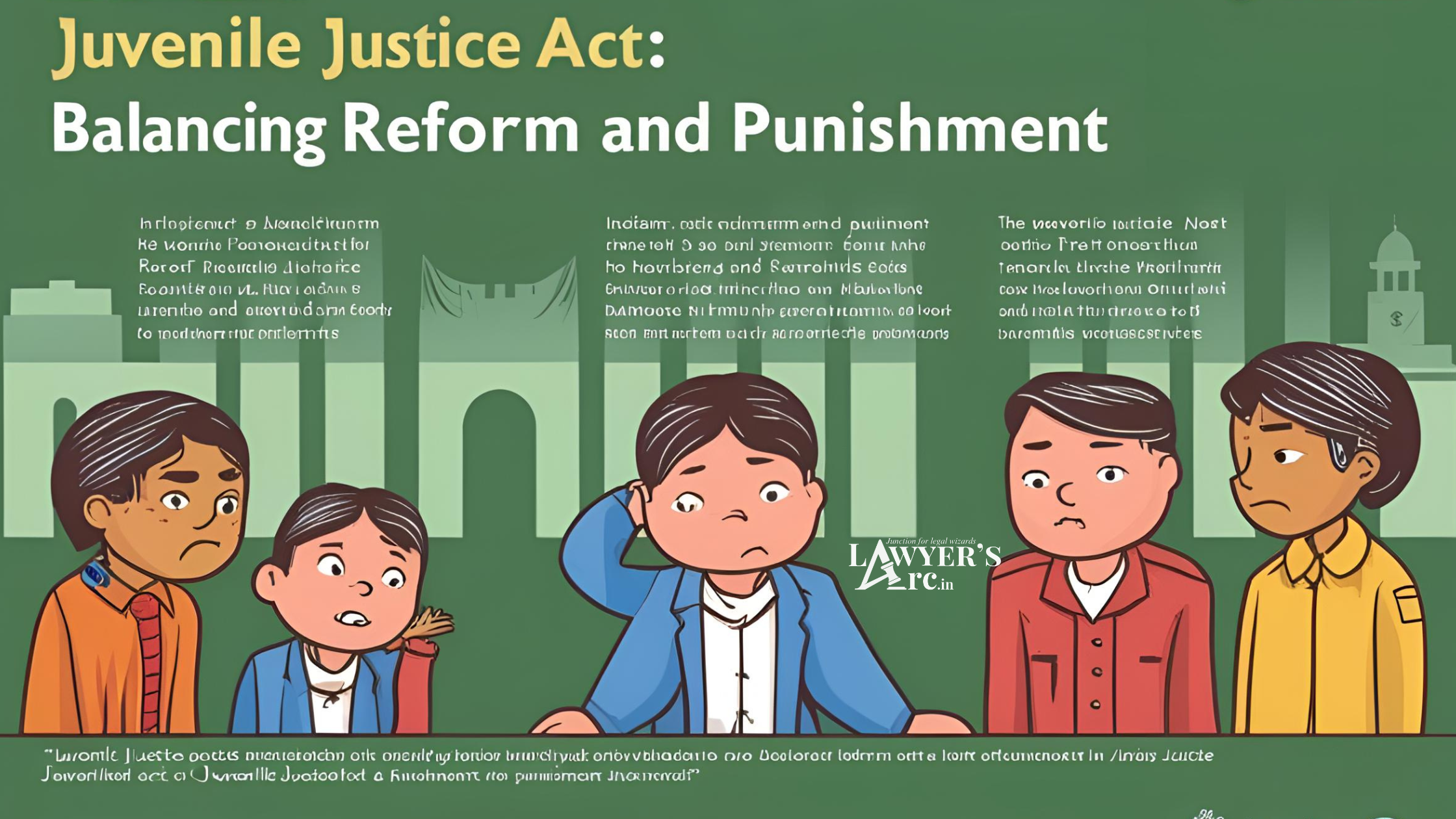
Juvenile Justice: Balancing Reform, Rehabilitation, and Responsibility
~Sura Anjana Srimayi
INTRODUCTION
Juvenile Justice is a special and quite intricate field in any country's justice system. The legal philosophy underlying such a system is that children (in most countries, including India, persons under the age of 18 years) cannot be dealt with under the same laws as adult offenders due to their developmental immaturity, greater potential for reform, and vulnerability. The aim is thus not punitive but rehabilitative; the goal is to bring the juvenile back into mainstream society as a useful citizen. In India, this system is primarily anchored in the Juvenile Justice (Care and Protection of Children) Act, popularly known as the JJ Act, which has seen an enriching evolution in balancing the interests of protection for children in need of care and protection versus accountability for children in conflict with the law. The debate continues to argue where to strike a balance between an appropriate protective environment for most children and responsibility for children committing heinous crimes.
The Dual Mandate of the JJ Act
The JJ Act operates with a dual, at times complex, mandate :
1. Children in Need of Care and Protection (CNCP)
This category involves abandoned, orphaned, trafficked, abused, or working children. The Act provides a system that secures their safety and well-being.
- Key Institutions: CWC is the central judicial body for dealing with cases related to CNCP. It is vested with the authority to decide on the needs of the child and issue orders for suitable institutional or non-institutional care such as foster care, adoption, or placement in Children's Homes.
- Focus: The approach here is wholly protective and restorative in nature-the rescue of a child from adverse conditions and securing his or her future.
2. Children in Conflict with the Law (CCL)
- This category deals with juveniles who are alleged to have committed an offense. The proceedings are designed to be child-friendly, non-adversarial, and focused on social investigation rather than just prosecution.
- Key Institutions: JJB is the judicial body before which cases related to CCL are brought. It comprises one Metropolitan Magistrate or Judicial Magistrate of the First Class and two social workers, one of whom shall be a woman. The JJB holds inquiries and passes suitable orders for rehabilitation.
- Focus: Emphasis is placed on social reintegration by counseling, community service, vocational training, and non-institutional supervision, considering incarceration only as a last resort and for the shortest possible duration.
The Evolution and Controversies: Age and Heinous Crimes
The most far-reaching and controversial amendments to the JJ Act were thus carried out following the case of the Delhi gang rape in 2012, in which one of the accused was a juvenile, nearly 18 years old. A spate of legislation followed this incident, namely the Juvenile Justice (Care and Protection of Children) Act, 2015.
The 2015 Act introduced a provision for trying and sentencing juveniles between 16 and 18 years of age who had committed "heinous offenses"-those punishable with imprisonment of seven years or more-under the adult criminal justice system.
- Preliminary Assessment: Before the case is transferred to the adult court, it has to be examined by the Preliminary Assessment conducted by the JJB. It assesses the mental and physical capability of the child to commit the offence, the ability to understand the nature and consequences, and the circumstances in which the offence was committed, assisted by experienced psychologists or psycho-social workers.
- Controversy: The clause fundamentally undermines the very principle of doli incapax and the whole notion of giving all minors under the age of 18 the same treatment in rehabilitation. Opponents say it is both difficult and unreliable to effectively determine a juvenile's "maturity," and that in practice, the move lowers the age of criminal responsibility for some crimes.
- The Cap: Importantly, even if tried as an adult, the juvenile cannot be sentenced to death or life imprisonment without the possibility of release, offering a residual protective cap.
Implementation Challenges
The JJ Act, despite its progressive intent, faces severe implementation deficits across Maharashtra and the nation:
- Infrastructure Deficiencies: Many states lack adequate and well-maintained Observation Homes for children awaiting inquiry, and Special Homes for children placed after an order. Overcrowding, poor sanitation, and lack of quality educational and vocational facilities are other concerns that thwart the core goal of rehabilitation.
- Lack of trained personnel; qualified social workers, probation officers, and counselors who can help in the functioning of CWCs and JJBs are short in supply. There are also all too frequent criticisms of hurried Preliminary Assessments, or those conducted by poorly trained personnel, which challenge their judicial integrity.
- Data Gaps and Monitoring: There is a persistent lack of reliable, standardized data regarding the status of children in institutions and their follow-up on release, which makes it tough to measure whether rehabilitation programs are working or to expose systemic failures.
- Stigma and Reintegration: Juveniles released after rehabilitation often face severe social stigma, making educational and employment opportunities scarce. This high rate of relapse undermines the whole system's goal.
CONCLUSION
Towards a Restorative Future The future of juvenile justice in India lies beyond the reactive debate on age and punishment and needs to be focused on a holistic, restorative justice framework. This requires:
- Investment in Prevention: Shifting resources to early intervention, family support programs, and community-based initiatives that address the root causes of delinquency, such as poverty, lack of education, and domestic violence.
- Professionalization: Ensuring that every member of the JJB and CWC is well-trained in child psychology, social work, and child rights to ensure a strong and evidence-based Preliminary Assessment.
- Deinstitutionalization: The Act focused on non-institutional care and other methods of care, such as foster care, adoption, and sponsorship. Institutionalization is reserved for the most difficult cases only.
- Strengthening Aftercare: Creating robust legal and resource provisions for mandatory Aftercare Programs which provide education, skill training, and accommodation support to the juveniles released to make sure they successfully socioeconomically reintegrate into society to break the cycle of recidivism.
Juvenile justice is not about punishing a child for making a mistake but about investing in a young life and, by extension, in the nation's future. A legal framework is only as effective as the social will and resource commitment applied to its implementation.
"Unlock the Potential of Legal Expertise with LegalMantra.net - Your Trusted Legal Consultancy Partner”
Disclaimer: Every effort has been made to avoid errors or omissions in this material in spite of this, errors may creep in. Any mistake, error or discrepancy noted may be brought to our notice which shall be taken care of in the next edition In no event the author shall be liable for any direct indirect, special or incidental damage resulting from or arising out of or in connection with the use of this information Many sources have been considered including Newspapers, Journals, Bare Acts, Case Materials , Charted Secretary, Research Papers etc