
Forget Password

View News
The Evolving Legal Framework of Indian Education (2026)
The Evolving Legal Framework of Indian Education (2026)
~Sura Anjana Srimayi
INTRODUCTION
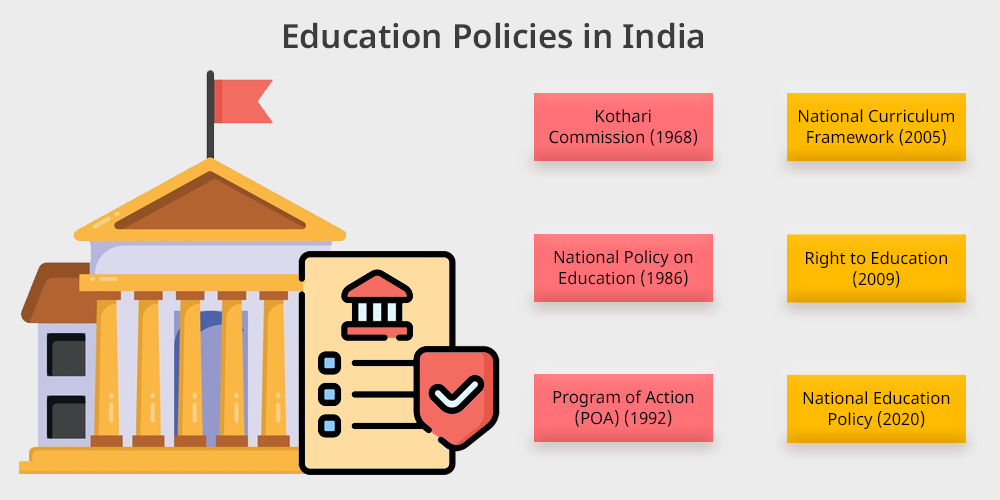
As of June 2026, India’s educational landscape is defined by a bold transition from a legacy-based, rote-learning system to a dynamic, technology-integrated, and equity-focused framework. The convergence of the foundational Right to Education (RTE) Act, 2009, the comprehensive National Education Policy (NEP) 2020, and the newly promulgated UGC Equity Regulations, 2026, has created a robust legal environment aimed at democratizing knowledge and ensuring inclusion.
I. The Fundamental Bedrock: Right to Education (RTE) Act
The Right of Children to Free and Compulsory Education (RTE) Act, 2009, remains the cornerstone of India’s school education system. Stemming from Article 21-A of the Constitution, it mandates that every child aged 6 to 14 years has a fundamental right to elementary education.
1. Social Inclusion
A defining feature of this law is the 25% reservation for children from Economically Weaker Sections (EWS) and disadvantaged groups in private, unaided schools. A critical judicial reaffirmation occurred in January 2026 (Dinesh Biwaji Ashtikar vs. State of Maharashtra), where the Supreme Court labeled this provision a "national mission," emphasizing its role in breaking entrenched barriers of caste and class.
2. Norms and Standards
The Act enforces mandatory quality benchmarks, including Pupil-Teacher Ratios (PTR), functional sanitation, and prohibitions against physical punishment and screening procedures. While infrastructure gaps are rapidly closing, with over 98% of schools now featuring functional facilities, the legal challenge in 2026 remains the timely reimbursement of private schools for the EWS quota, a persistent administrative hurdle.
II. The NEP 2020: The Transformative Paradigm
In 2026, the National Education Policy (NEP) 2020 is no longer a blueprint; it is the operational reality of the Indian classroom. By emphasizing flexibility over rigidity, the policy has effectively "liberated" students from the traditional silos of academic streams.
1. Democratization of Choice
As noted by Union Minister Dr. Jitendra Singh in June 2026, the NEP has dismantled the "prisoner of subjects" model. Students now enjoy unprecedented freedom to combine diverse disciplines, from biotechnology to literature. based on personal aptitude rather than parental or societal default.
2. Technology and Democratization
The policy has leveraged digital platforms to level the playing field between metropolitan hubs and smaller towns. Data from 2026 competitive examinations shows a significant surge in top-ranking candidates from non-metropolitan regions, a trend attributed to the digital democratization of learning resources.
III. Addressing Equity: The UGC Equity Regulations, 2026
The most recent and significant development in higher education is the University Grants Commission (Promotion of Equity in Higher Education Institutions) Regulations, 2026. Notified in January 2026, these regulations, often termed the "Anti-Discrimination Rules", represent a strict mandate for inclusive campuses.
1. Structural Safeguards
- Equity Committees: Every university is now legally mandated to establish an Equity Committee chaired by the institutional head, with diverse representation including SC, ST, OBC, PwD, and women members.
- Grievance Redressal: The regulations introduce strict, time-bound complaint resolution. Severe cases must be investigated within 24 hours, and standard complaints within 15 working days.
- Institutional Accountability: Institutions are required to appoint an "Equity Officer" and report annually to a national UGC portal. Failure to comply can result in financial penalties or the withdrawal of grants.
2. Controversy and Criticism
The regulations have faced pushback from various groups, with concerns ranging from the potential for "reverse discrimination" to the administrative burden of setting up new committees. Despite protests in early 2026, the Supreme Court’s oversight underscores the government's commitment to prioritizing institutional accountability in preventing caste-based or gender-based harassment.
IV. Quality Enhancement and Data-Driven Governance
Beyond formal laws, the "governance of education" has shifted toward evidence-based policy. The May 2026 NITI Aayog report, School Education System in India: Temporal Analysis and Policy Roadmap, utilizes decade-long data from UDISE+ and ASER 2024 to guide state-level reforms. This marks a legal and administrative pivot where success, such as the recovery of foundational literacy and numeracy levels in states like Uttar Pradesh and Bihar, is measured through real-time monitoring and mission-mode implementation.
CONCLUSION
The Indian educational law framework in 2026 is a synthesis of rights-based mandates and flexible, future-ready policy. While the RTE Act secures the fundamental right to childhood education, and the NEP 2020 empowers the learner through multidisciplinary freedom, the UGC Equity Regulations, 2026, ensure that this access is shielded from the scourge of discrimination. As India moves forward, the primary legal challenge lies in maintaining this equilibrium, balancing the rapid scaling of digital infrastructure with the necessary administrative rigor to ensure no student is left behind in the pursuit of a global-standard education.
Disclaimer: The information published on this website is provided for general informational and educational purposes only and does not constitute legal advice, a legal opinion, or a substitute for professional consultation. While reasonable efforts are made to ensure accuracy, the content may contain errors, omissions, outdated information or incorrect legal references. Readers are advised to independently verify the information and consult a qualified legal professional before relying upon it. No advocate-client or professional relationship is created merely by accessing or using this website.